Kodachi Review
Kodachi OS 10.0.3: Hardened Debian Built Around Privacy
Most distributions start with a desktop and add applications. Kodachi OS starts with a threat model. According to its DistroWatch listing, Kodachi OS is a Debian-based Linux distribution focusing on providing a secure and private computing environment. That focus shows in every choice DistroWatch records for it — from its hardened Debian “Stable” base to the VPN, proxy and authentication infrastructure the project runs behind it.
The latest release in DistroWatch’s feature table is Kodachi OS 10.0.3, released on 30 September 2026, following 9.0.1 on 23 March 2026. DistroWatch lists Kodachi OS — formerly Linux Kodachi — as Active and free, based on Debian (Stable), originating in Oman, for the x86_64 architecture only, and categorised as Desktop, Live Medium, Privacy and Security. If you want the foundation first, start with our Debian review — Kodachi takes Debian Stable and hardens it for a very specific job.
It has a loyal niche following by DistroWatch’s numbers. Kodachi OS ranks 110th in DistroWatch’s popularity rankings with 123 hits per day, and its average visitor rating is 7.5 out of 10 from 50 reviews — a solid, debated score that fits a system privacy enthusiasts argue about precisely because they care about the details.
At a Glance
| Latest Release | Kodachi OS 10.0.3 (30 September 2026) |
| OS Type | Linux |
| Base | Debian (Stable) |
| Origin | Oman |
| Desktop | Xfce (highly customised) |
| Architectures | x86_64 |
| Installer | Calamares |
| Package Manager | apt |
| Package Formats | deb |
| Release Model | Fixed |
| Init System | systemd |
| File Systems | Btrfs, ext4, XFS |
| Category | Desktop, Live Medium, Privacy, Security |
| Price | Free (ISO image size 3,000–4,400 MB for 10.0.3, per DistroWatch’s feature table) |
| DistroWatch Popularity | 110 (123 hits per day) |
| Visitor Rating | 7.5 / 10 from 50 reviews |
A Hardened Debian Stable, in Desktop and Server Variants
DistroWatch says Kodachi OS offers variants for both server and desktop computers, built on a hardened Debian “Stable” build. That is a deliberate pairing: Debian Stable supplies the conservative, predictable base, and Kodachi’s hardening is layered on top rather than traded against it. The release model stays Fixed and the init system is systemd, per DistroWatch’s feature table for 10.0.3, so underneath the privacy tooling this is a conventional Debian-family system.
Refinance Your Student Loan At Sofi
Software management is equally conventional. DistroWatch lists apt as the package manager and deb as the package format for 10.0.3, with LibreOffice as the office suite. Readers weighing a security-focused Debian system against a testing toolkit should also see our Parrot review — Parrot and Kodachi start from similar Debian ground but aim at different sides of the security world, testing on one side and private everyday computing on the other.
Customised Xfce and LibreWolf on the Desktop
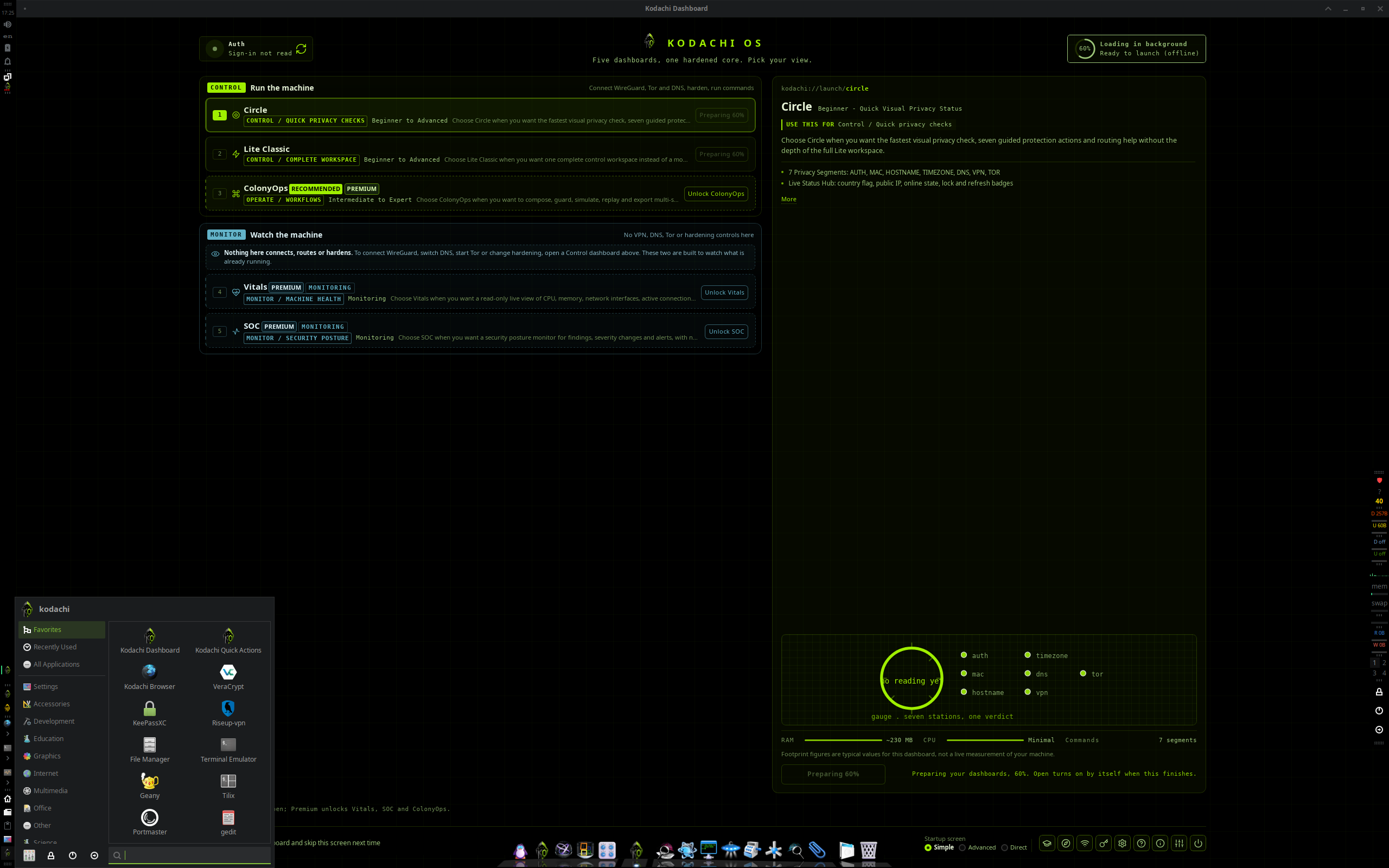
The desktop variant, DistroWatch says, features a highly customised Xfce desktop environment and the LibreWolf web browser. Xfce is the only desktop listed, and DistroWatch’s feature table confirms Xfce as the default for 10.0.3, with LibreWolf — replacing Firefox, which older releases used — as the default browser. Both choices suit the mission: Xfce is light enough for a live session, and LibreWolf is a privacy-oriented browser choice out of the box.
Try YouTube TV | Special Discount
Installation follows the modern graphical route. DistroWatch’s feature table lists Calamares as the installer for 10.0.3, multilingual support, and Btrfs, ext4 and XFS as the journaled file systems. The 10.0.3 ISO is 3,000–4,400 MB per DistroWatch, and Kodachi is categorised as a Live Medium, so you can run it live before deciding to install — the natural way to try a privacy system, much as in our Tails review, though Kodachi, unlike an amnesic live-only approach, is also built to be installed and used as a desktop and server system.
The Fleet Behind It: VPN, Proxy and Authentication Nodes
What most sets Kodachi apart, in DistroWatch’s description, is not on the ISO at all. DistroWatch says that on top of the hardened Debian system lies a server fleet of VPN, proxy and authentication nodes on a takedown-resistant remote host. The project also provides an online service layer at kodachi.cloud with verification tools, license management and software distribution.
DistroWatch states the goal plainly: to provide a highly private desktop and server system, with observable routing and disclosure of potential privacy leaks. That last phrase matters — Kodachi’s pitch is not just routing traffic privately, but showing the user how it is routed and flagging where privacy could leak. It is a different emphasis from a penetration-testing toolkit like our Kali review covers: Kali is built to probe other systems, Kodachi is built to protect its own user’s system and connections.
AWS Alternative - Digital Ocean
Who Should Try Kodachi OS?
- Privacy-conscious desktop users — DistroWatch describes Kodachi OS as focusing on providing a secure and private computing environment, categorised under Privacy and Security.
- Debian users who want hardening done for them — DistroWatch says the underlying system is a hardened Debian “Stable” build, with familiar apt and deb package management.
- Users who want VPN and proxy infrastructure included — DistroWatch describes a server fleet of VPN, proxy and authentication nodes on a takedown-resistant remote host, plus the kodachi.cloud service layer.
- Live-session and Xfce fans — DistroWatch lists Kodachi as a Live Medium with a highly customised Xfce desktop and the LibreWolf browser.
- Not users who need another architecture or a rolling release — DistroWatch lists x86_64 only and a fixed release model for 10.0.3.
Final Thoughts
Kodachi OS 10.0.3, released on 30 September 2026 per DistroWatch, is a focused privacy system: free, fixed-release and x86_64 only, installed with Calamares, managed with apt, and delivered as a highly customised Xfce desktop with LibreWolf on a hardened Debian Stable base. Its identity is in what surrounds that base — the VPN, proxy and authentication node fleet, the kodachi.cloud verification and distribution layer, and a stated goal of observable routing and disclosure of potential privacy leaks.
If privacy is the reason you run Linux, Kodachi is worth a live session before anything else — boot the ISO, check how it reports its own routing, and decide whether its service-backed model fits how you want to work. Desktop and server variants mean the same hardened approach can follow you from the laptop to a machine you run for others.
Source: DistroWatch’s Kodachi OS listing, covering the Kodachi OS 10.0.3 release of 30 September 2026.