Peppermint Review
Peppermint OS 2025-10-12: A Lightweight Desktop That Treats the Cloud as a First-Class Citizen
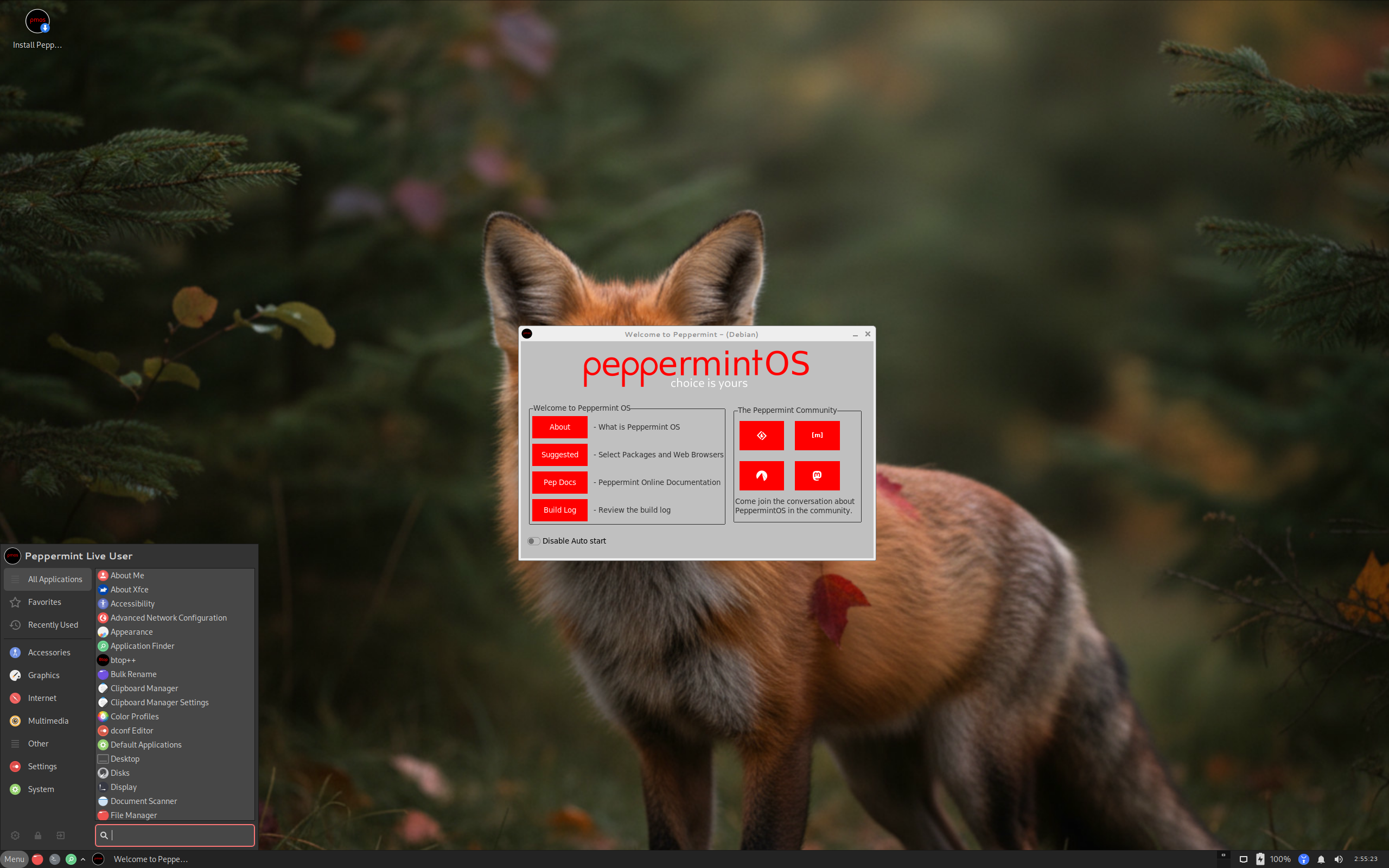
What if a Linux distribution stopped pretending the browser is just another app and instead built the whole desktop around it? That is the question Peppermint OS has been answering for years, and its latest release — Peppermint OS 2025-10-12 — keeps the answer simple: a Debian- and Devuan-based system with Xfce, easy installation, and a special trick for turning web apps into first-class citizens.
Peppermint OS is a Debian- and Devuan-based (previously a Lubuntu-based) Linux distribution that aims to be fast and easy on system resources, according to its DistroWatch description. It comes out of the United Kingdom and targets the classic lightweight desktop: Xfce for x86_64 machines, shipped as a Live Medium, with a Raspberry Pi category tag for good measure. Visitors give it a 7.6 out of 10 across 104 reviews, and it sits at #86 on DistroWatch at roughly 163 hits per day.
The latest release listed on DistroWatch is Peppermint OS 2025-10-12, announced on October 14, 2025. The ISO is free to download, installs through the friendly Calamares installer, and updates in the straightforward fashion Debian-based systems are known for — the same family philosophy as our MX Linux review subject, another Debian descendant with an Xfce heart.
At a Glance
| Detail | Peppermint OS 2025-10-12 |
|---|---|
| Release announced | October 14, 2025 |
| Based on | Debian (Stable), Devuan |
| Origin | United Kingdom |
| Desktop | Xfce |
| Installer | Calamares |
| Package base | Debian/Devuan (deb) |
| Architecture | x86_64 |
| Category | Desktop, Live Medium, Raspberry Pi |
| Cost | Free (ISO download) |
| Status | Active |
| DistroWatch popularity | #86, about 163 hits per day |
| Visitor rating | 7.6/10 from 104 reviews |
Details above are based on the DistroWatch Peppermint OS listing for release 2025-10-12.
Debian and Devuan Under the Hood
Peppermint’s base has been a slow-moving story. It started life as a Lubuntu-based distribution, but DistroWatch now lists it as based on Debian (Stable) and Devuan — Debian’s famously careful, long-supported core plus the Devuan lineage that came into the picture around 2022–2023, when Peppermint began offering Devuan-based builds. That pedigree means the familiar deb package base, wide hardware compatibility, and the straightforward updates the official description brags about.
Readers of our Devuan review will recognize the philosophy — the Peppermint team’s willingness to ship Devuan-based editions shows the same respect for user choice that defines the systemd-free Debian world. And if you want a Debian-based Xfce system with a different flavor, our MX Linux review covers another long-running project with the same base and desktop, tuned for a slightly different audience.
The Site Specific Browser Trick
Peppermint’s signature feature is its Site Specific Browser (SSB). Instead of treating web apps as second-class tabs, Peppermint wraps them in dedicated browser windows so cloud services feel like native applications — each with its own launcher and window, integrated right into the Xfce desktop. Webmail, cloud office suites, and streaming services stop being “things inside a browser tab” and start behaving like installed software.
It is a small idea with outsized consequences. For users whose computing lives mostly in the browser anyway — students, office workers, anyone whose “app” is a website — SSB means the machine itself can stay lean while the web does the heavy lifting. And because Peppermint is light on resources to begin with, even modest hardware can run a full set of “cloud apps” without breaking a sweat.
Xfce, Slimmed for Speed
The desktop story has its own arc. Peppermint once ran a hybrid LXDE/Xfce environment — LXDE’s lxsession mixed with Xfce’s panel and application menu — but starting in 2022 it dropped the LXDE components and moved to pure Xfce. The result is a familiar, panel-driven desktop with a modest appetite: a good match for older hardware and anyone who finds GNOME or KDE heavier than necessary.
AWS Alternative - Digital Ocean
DistroWatch credits Peppermint with “straight forward updates and easy step-by-step installation using the Calamares installer,” and both halves of that sentence matter for the audience this distribution targets. Calamares is one of the friendliest installers in the Linux world — partition, user, timezone, done — and Peppermint pairs it with Xfce’s familiar, classic desktop layout, so a newcomer is never more than a click from something recognizable. If your hardware is genuinely ancient, our antiX review covers an even leaner Debian-family option built for exactly that scenario; Peppermint sits one rung up the ladder, trading a bit of footprint for a fuller, more conventional desktop.
Plenty of Branches to Watch
Peppermint is not sitting still. DistroWatch’s recent headlines for the project tell the story: the team has experimented with a Void-based build, launched a “Loaded” edition, tested a net-install edition, and released Devuan-based ARM builds — including the Raspberry Pi support the category tag promises. That willingness to explore alternate bases while keeping the Debian-line flagship stable is part of what makes Peppermint interesting to follow.
Who Should Try Peppermint OS?
- Cloud-first users whose daily workflow lives in web apps — the Site Specific Browser turns them into proper desktop applications.
- Owners of modest hardware who want a modern, supported Xfce desktop without the weight of GNOME or KDE.
- Debian fans who appreciate Debian Stable’s reliability — see our Debian review for the full-fat original.
- Lightweight-distribution hoppers — if our antiX review felt a little too spartan, Peppermint offers a gentler Debian-based entry point.
- Simplicity seekers who want a Calamares installer, straightforward updates, and a live medium they can try before committing.
Final Thoughts
Peppermint OS 2025-10-12 knows what it is: a light, friendly, Debian- and Devuan-based desktop that gets out of your way and lets the cloud do its thing. It will not impress users hunting for the newest packages or the flashiest desktop — that was never the mission. The mission is a machine that boots quickly, updates simply, and treats web apps as first-class citizens, all on hardware that heavier distributions left behind.
With its Calamares installer, pure-Xfce desktop, Active status on its DistroWatch listing, and a 7.6/10 visitor rating at #86 on DistroWatch, Peppermint holds a quiet, respectable place in the lightweight world. Users shopping for other Debian-based lightweights can compare it with our Q4OS review, a kindred spirit in the “classic desktop, modest hardware” camp.
Bottom line: fast, simple, cloud-friendly, and free — Peppermint OS is the lightweight Debian-line distribution for people whose most important application is the web.
Source: DistroWatch: Peppermint OS feature and package table. Information cited in this post reflects the DistroWatch listing for Peppermint OS release 2025-10-12, announced October 14, 2025.