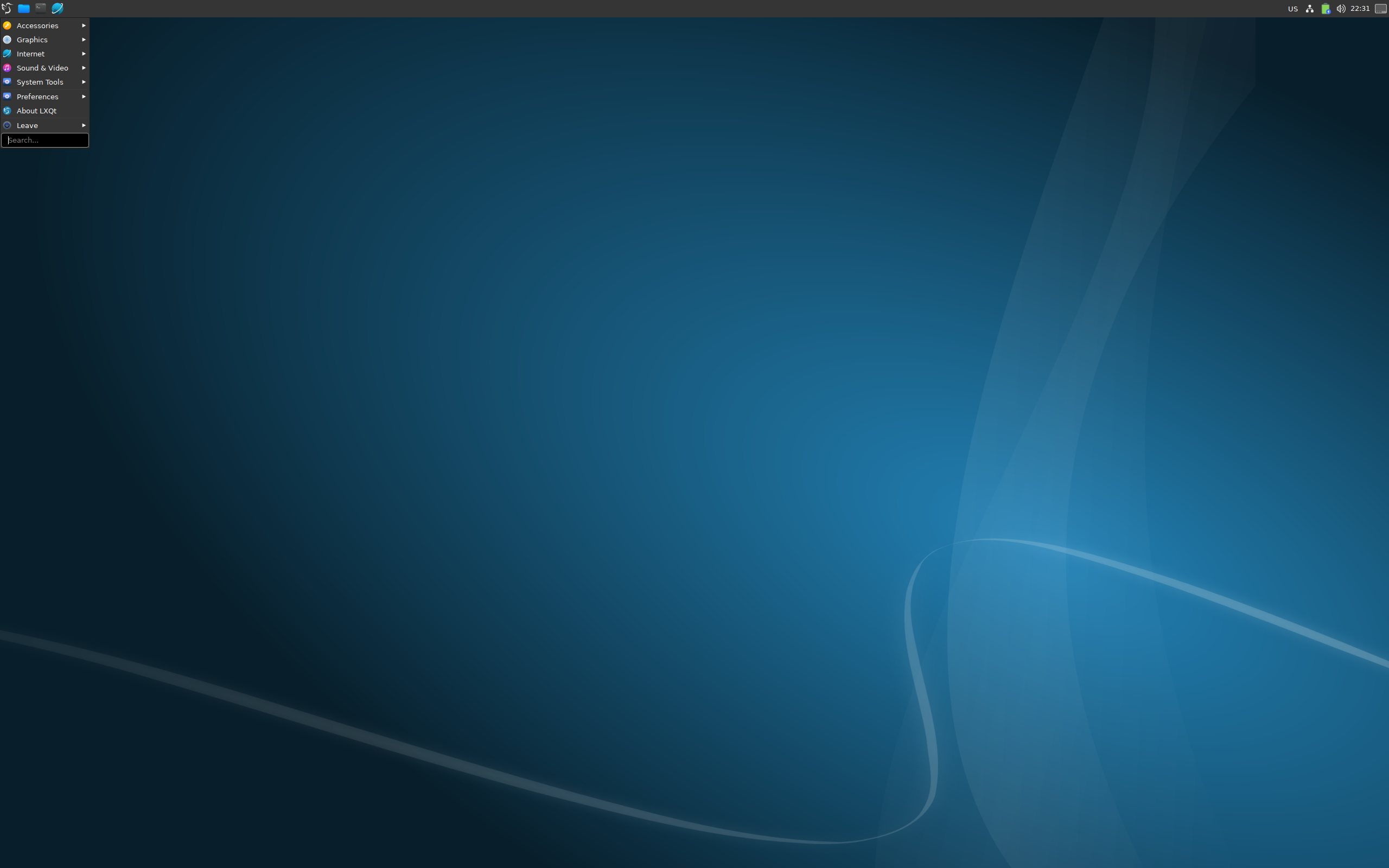
PorteuX Review
PorteuX 2.8: A Portable, Slackware-Based Linux That Runs From a Thumb Drive
PorteuX is a Linux distribution built around a simple, practical idea: an operating system you can carry in your pocket. According to its DistroWatch listing, PorteuX is based on Slackware Linux, inspired by Slax and Porteus, and available to the public for free. Its stated goals are to be fast, small, portable (run from a thumb drive), modular, and optionally immutable.
The current listed release is PorteuX 2.8, released on August 23, 2026. It is a fixed-release distribution for 64-bit x86 computers, and it ships as a live medium — which means the same system you test on a USB stick is the system you run. The listing notes that PorteuX is pre-configured for basic usage, including lightweight applications for each of its desktop environments, so it is usable out of the box rather than starting from an empty shell.
One detail stands out immediately: no browser is included. Instead, PorteuX provides an app store for downloading any of the most popular browsers, as well as other applications. That choice keeps the base image small and lets users install only the browser they actually want. For the current listed release, see the PorteuX page at DistroWatch.
At a Glance
| Current listed release | PorteuX 2.8, released August 23, 2026 |
| Based on | Slackware Linux (inspired by Slax and Porteus) |
| Desktop choices | Cinnamon, COSMIC, GNOME, KDE Plasma, labwc, LXDE, LXQt, MATE, Xfce |
| Release model | Fixed release |
| Package management | slackpkg |
| Init system | SysV |
| Supported architecture | x86_64 |
| Distribution categories | Desktop, Immutable, Live Medium |
| Price | Free |
| DistroWatch popularity | Ranked 107 (133 hits per day) |
| Average visitor rating | 8.7/10 from 6 reviews |
Table note: feature details and version information are based on the DistroWatch PorteuX listing for release 2.8.
Built for the Thumb Drive: Portability and Live Use
PorteuX’s defining trait is portability. The project describes itself as designed to run from a thumb drive, and DistroWatch classifies it as a live medium. That puts it in a different family from distributions designed around a single installed-on-a-hard-disk workflow: the system is expected to boot on different machines, carry your environment with you, and work without touching the host computer’s drives.
This portability-first design makes PorteuX a natural comparison for other carry-with-you distributions. If the idea of a full system on removable media appeals to you, our Puppy Linux review covers another distribution built around tiny, portable, live usage — while our antiX review looks at a lightweight, SysV-init distribution that is equally at home on older or secondary hardware.
Because it is small and modular, PorteuX is also a candidate for keeping a rescue-and-testing toolkit close at hand: boot it on a borrowed machine, do your work, and leave nothing behind.
Nine Desktop Options, One Small Core
The DistroWatch listing names nine desktop choices for PorteuX: Cinnamon, COSMIC, GNOME, KDE Plasma, labwc, LXDE, LXQt, MATE, and Xfce. The project’s own description highlights the lightweight end of that spectrum, noting pre-configured lightweight applications for each desktop environment. That is an unusually wide spread for a distribution whose stated goal is to stay small — it means a user can pick a modern full-featured desktop like KDE Plasma or GNOME, or drop down to LXQt, LXDE, or Xfce when resources are tight.
The breadth of choice is worth comparing with distributions that commit to a single desktop. Our Zenwalk review covers another Slackware-based option with its own take on a lightweight desktop, which makes for an interesting contrast in how two distributions build on the same Slackware foundation.
Slackware Under the Hood: slackpkg and SysV init
PorteuX’s Slackware base shows through in its plumbing. The listing identifies slackpkg as the package management tool and SysV as the init system. Slackware’s conservative, straightforward philosophy — simple package tools, a classic init system, minimal hidden automation — tends to appeal to users who like to see exactly what their system is doing. For a portable distribution, that simplicity is a feature: fewer moving parts means a system that is easier to understand and harder to break in strange ways.
Software updates flow through the fixed-release model, so version 2.8 represents a stable, known set of packages rather than a rolling stream of updates. Users who prefer continuous updates may want to compare with a rolling-release option, but the fixed model suits PorteuX’s purpose: a known-good, portable system that behaves the same way every time you boot it.
Modular, Optionally Immutable, and Browser-Free by Default
DistroWatch classifies PorteuX in the “Immutable” category, and the project’s description says it is optionally immutable. That is a notable combination for a Slackware-family distribution: an optionally locked-down base system gives the stability of a read-only foundation with the freedom to opt out when you need to change things.
The “no browser included” decision reinforces the modular philosophy. Rather than shipping a default browser that half its users would replace anyway, PorteuX points users to its app store for browsers and other applications. The result is a smaller starting image and a system that contains only what you chose to add.
Who Should Try PorteuX?
PorteuX is especially interesting for users who want a small, portable system rather than a full install-first workstation:
- USB-stick Linux users who want a complete, pre-configured system that boots from a thumb drive on different machines.
- Slackware-curious users who want the Slackware base, slackpkg, and SysV init without installing classic Slackware — our Zenwalk review covers another route into that same ecosystem.
- Lightweight-desktop fans who want LXQt, LXDE, or Xfce pre-configured, alongside the option of KDE Plasma, GNOME, or Cinnamon on the same modular core.
- Tinkerers who like immutability as an option rather than a mandate — PorteuX offers the immutable approach without forcing it.
- Users who want a minimal starting point with no pre-installed browser and an app store for adding exactly what they need.
On the other hand, PorteuX may not be the best fit for someone who wants a single install-once desktop with a traditional graphical installer workflow, maximum hand-holding during setup, or a huge pre-installed application selection. Its strength is being small, portable, and modular — not being everything to everyone.
US Mobile | Plans As Low As $10, Get $30 Instantly
Final Thoughts
PorteuX 2.8 occupies a distinctive niche: a free, Slackware-based, fixed-release distribution whose first priority is running from a thumb drive. With nine desktop environments to choose from, a modular and optionally immutable design, lightweight pre-configured applications, and a deliberately browser-free base image topped by an app store, it gives portable-Linux users a polished, opinionated system instead of a bare toolkit.
The DistroWatch numbers tell a quiet success story: a popularity rank of 107 with 133 hits per day and an average visitor rating of 8.7 out of 10 from 6 reviews. For anyone who likes the idea of carrying their Linux system with them — and who appreciates Slackware’s straightforward philosophy underneath — PorteuX is worth a test boot. If you are still comparing small and portable options, our Alpine review covers another distribution famous for staying tiny.
Bottom line: PorteuX is not trying to be another full desktop distribution. It is a fast, small, portable system built on Slackware — one you can carry in your pocket and boot anywhere.
Source: DistroWatch: PorteuX feature and release table. Information cited in this post reflects the DistroWatch listing for PorteuX release 2.8, dated August 23, 2026.