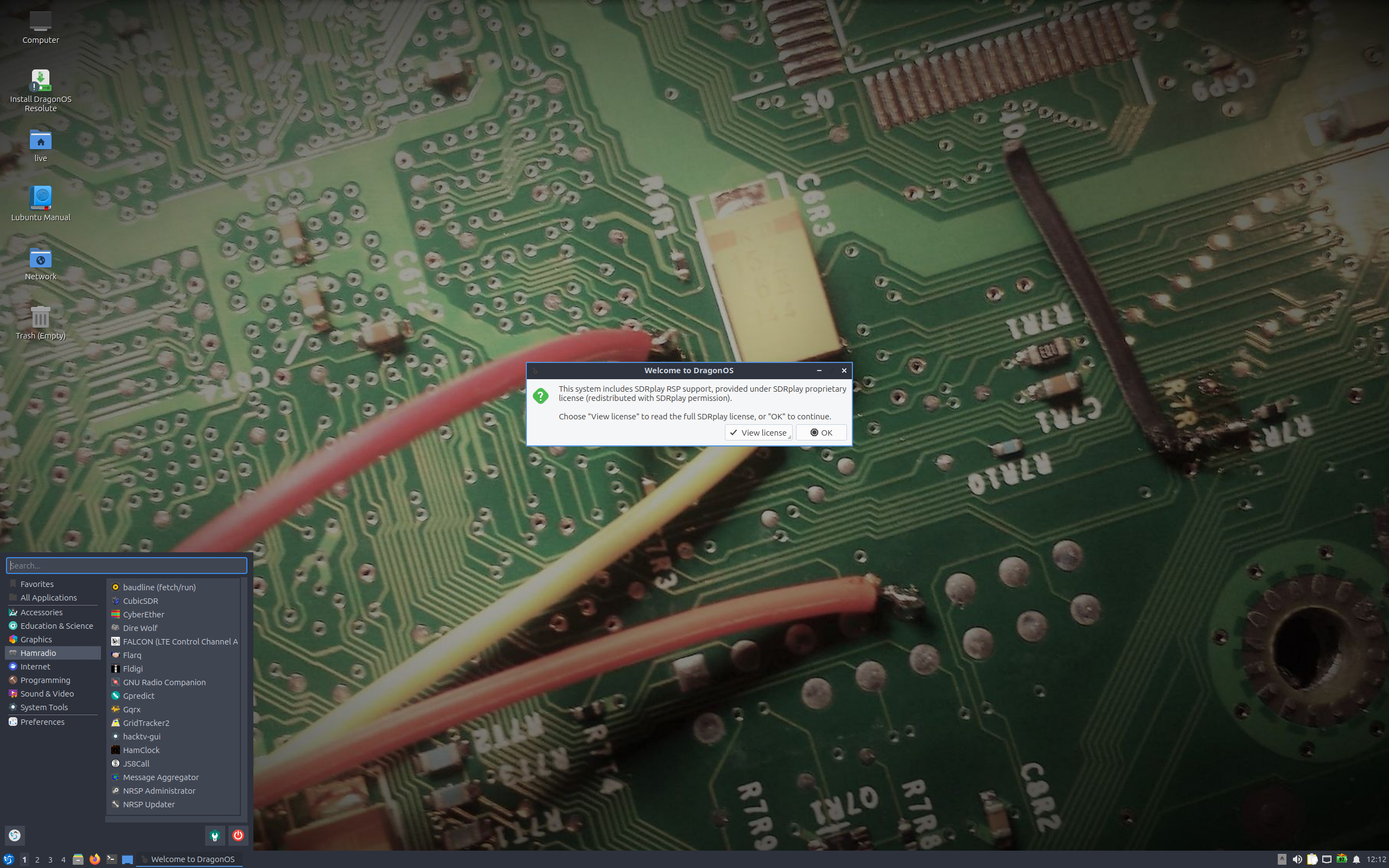
DragonOS Review
DragonOS Resolute_R1: A Purpose-Built Linux Distribution for Software Defined Radio
Most Linux distributions compete to be the best all-around desktop. DragonOS takes the opposite approach: it is a Lubuntu-based Linux distribution built around one specialist purpose — software defined radio (SDR). According to the DragonOS listing on DistroWatch, it ships a pre-installed suite of powerful, accessible open-source SDR software, with verified support for a range of inexpensive and powerful SDR hardware, including RTL-SDR, HackRF One, LimeSDR, and BladeRF.
The latest release listed on DistroWatch is DragonOS Resolute_R1, released on August 21, 2026. It is a free download (the ISO image is listed at roughly 3.7–3.8 GB), installs through the Ubiquity graphical installer, and runs the lightweight LXQt desktop. Under the radio toolkit sits a familiar foundation: DragonOS is based on Debian and Ubuntu LTS, manages software with APT in the DEB package format, boots with systemd, and targets 64-bit x86 systems. DistroWatch lists it in the Desktop, Live Medium, and Specialist categories with a fixed-release model and an “Active” status.
If your frame of reference is general-purpose Ubuntu-family desktops, our Linux Mint review covers the mainstream end of that same Ubuntu LTS family tree — DragonOS starts from the same base and then layers on an entire radio lab.
At a Glance
| Distribution | DragonOS |
| Current listed release | Resolute_R1, released August 21, 2026 |
| Based on | Debian, Ubuntu (LTS) |
| Desktop | LXQt |
| Specialty | Software defined radio (SDR) |
| Installer | Ubiquity (graphical) |
| Package management | APT, DEB format |
| Release model | Fixed release |
| Architecture | x86_64 |
| Init system | systemd |
| Filesystems listed | Btrfs, ext4, XFS |
| Default browser | Firefox |
| Price | Free |
| DistroWatch popularity | Rank 78 (168 hits per day); visitor rating 8.8/10 from 4 reviews |
Feature details and version information are based on the DistroWatch DragonOS listing for release Resolute_R1.
US Mobile | Plans As Low As $10, Get $30 Instantly
Software Defined Radio, Ready Out of the Box
The heart of DragonOS is its radio stack. Rather than expecting users to hunt down decoders, signal-processing tools, and SDR front ends one package at a time, DragonOS preinstalls the open-source SDR suite so a fresh install is radio-ready. The DistroWatch description specifically highlights verified support for a lineup of accessible SDR hardware — RTL-SDR dongles, HackRF One, LimeSDR, BladeRF, and others — which covers the two most common entry points into the hobby: cheap RTL-SDR receivers for listening, and more capable transceivers for experimenting.
That pre-integration is the whole point. Getting an SDR workflow running on a generic distribution can mean chasing dependencies, building tools from source, and fiddling with USB permissions. DragonOS folds that friction into the install, so the first thing you do after setup can be listening rather than configuring.
Try YouTube TV | Special Discount
A Lightweight LXQt Desktop on Lubuntu Foundations
DragonOS uses the LXQt desktop — the lightweight Qt-based environment carried over from its Lubuntu roots — installed via the familiar Ubiquity graphical installer. It is a sensible pairing for a specialist distro: LXQt stays out of the way and sips resources, which matters when the machine’s real workload is real-time signal processing. Firefox is the listed default browser, so the system still works as a capable everyday desktop between radio sessions.
The lightweight, Debian-rooted approach should feel familiar to readers of our SparkyLinux review, another Debian-based option that keeps things lean. Both distros prove you don’t need a heavy desktop to get serious work done.
Fixed Release on Familiar Debian/Ubuntu Machinery
Under the hood, DragonOS is reassuringly conventional. It follows a fixed-release model on a Debian and Ubuntu LTS base, uses APT with DEB packages, boots with systemd, and lists Btrfs, ext4, and XFS among its supported journaled filesystems. If you already know your way around an Ubuntu-family system, the terminal, package manager, and system layout will feel like home — the same Ubuntu LTS foundation covered in our Ubuntu review, extended with a radio toolkit.
Get An Easy Personal Loan At Sofi
DistroWatch’s release table shows steady, if unhurried, development: the current Resolute_R1 landed on August 21, 2026, preceded by Noble_R9 on March 27, 2026, and the older r37.1 line from September 2024, which has since reached end of life. Download mirrors for the current ISO are listed on SourceForge.
Who Should Try DragonOS?
- Amateur radio operators and shortwave listeners who want a computer that doubles as a radio station the moment it boots.
- SDR hobbyists with RTL-SDR, HackRF One, LimeSDR, or BladeRF hardware who would rather experiment than troubleshoot driver and dependency stacks.
- Students and teachers exploring RF, signals, and wireless protocols who need a ready-made lab environment on a USB stick or spare laptop (DistroWatch lists it as a Live Medium).
- Fans of purpose-built specialist distributions — in the same spirit as our Kali review, which covers a distro built for security work rather than general use.
- Lubuntu and lightweight-desktop users comfortable with LXQt who want those familiar tools on an Ubuntu LTS base with a twist.
Final Thoughts
DragonOS knows exactly what it is: a specialist Linux distribution for software defined radio that happens to be a perfectly usable Lubuntu-based desktop underneath. It doesn’t try to out-Mint the mainstream distros; it gives radio people a pre-integrated toolkit on a stable, familiar Debian/Ubuntu LTS foundation, wrapped in a lightweight LXQt desktop that leaves system resources for the signals.
With an “Active” status, a fixed-release cadence, a free ISO, and an 8.8/10 visitor rating on DistroWatch, it is a compelling shortcut for anyone curious about SDR — or anyone already deep in the hobby who is tired of assembling the software stack by hand.
Source: DistroWatch: DragonOS page. Information cited in this post reflects the DistroWatch listing for DragonOS release Resolute_R1, dated August 21, 2026.